


-
Your shopping cart is empty!
Government Decree No. 243 Creates a More Enabling Regulatory Framework for Self-Generation and Self-Consumption Rooftop Solar PV
10/07/2026,
Array
Decree No. 243/2026/ND-CP, issued by the Government on 26 June 2026, amends and supplements a number of provisions of Decree No. 58/2025/ND-CP on renewable energy development, including the regulatory framework governing self-generation and self-consumption solar power
The issuance of Decree No. 243 represents an important regulatory adjustment aimed at addressing practical implementation barriers and establishing a more enabling environment for households and businesses to invest in rooftop solar photovoltaic (PV) systems primarily serving on-site electricity demand.
Compared with Decree No. 58, Decree No. 243 demonstrates a clear policy orientation toward simplifying administrative procedures, broadening the development scope of self-consumption solar PV, and classifying generating facilities according to the voltage level at the point of grid connection rather than relying primarily on installed capacity thresholds.
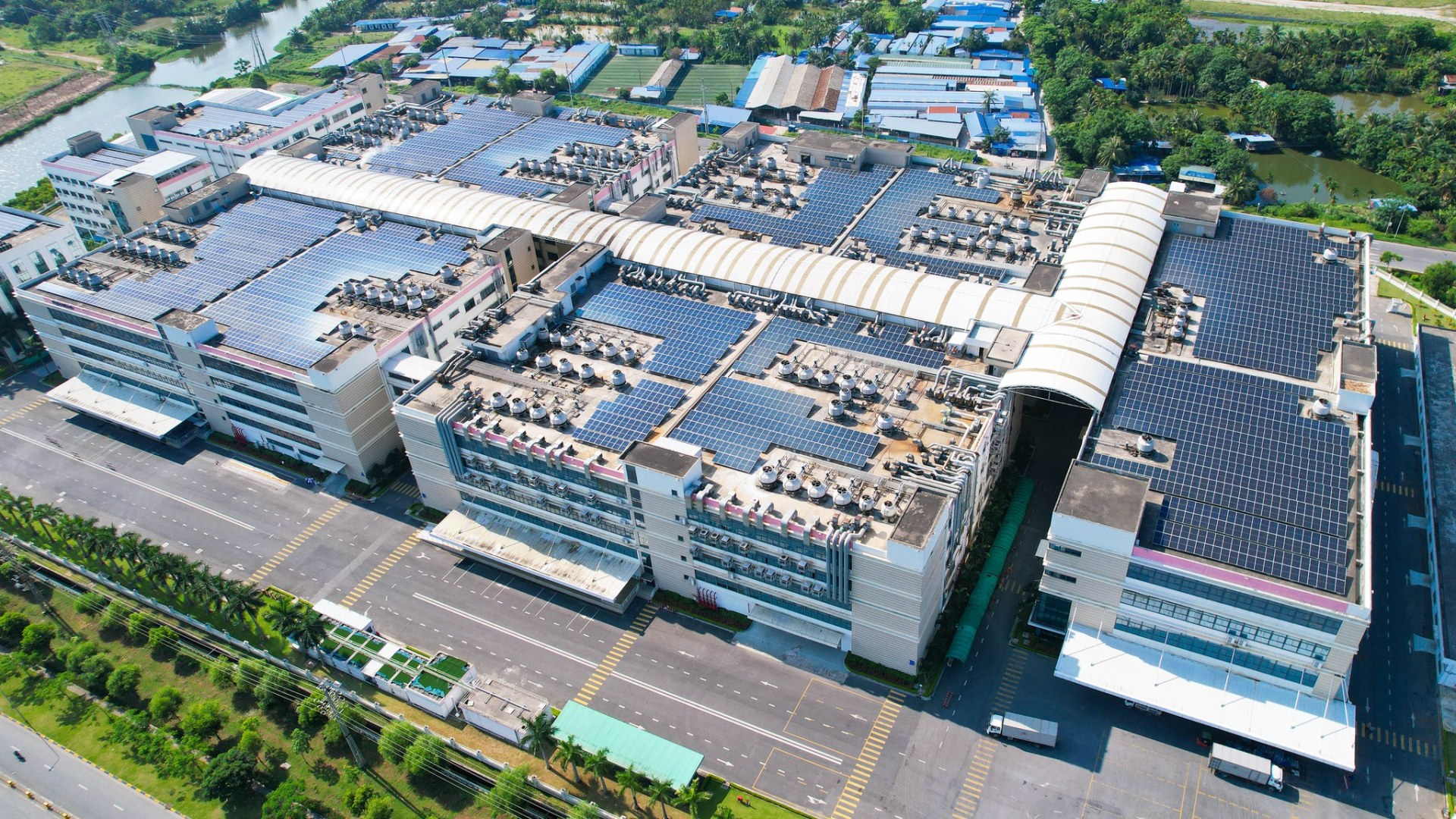
Under the revised framework, generating systems connected to the low-voltage distribution network are generally subject to simplified administrative requirements. In many cases, project owners are only required to submit a notification, while licensing is mainly required for systems connected at medium voltage that also sell surplus electricity to the grid.
This regulatory approach can significantly shorten project development lead times, reduce the number of administrative interfaces involved in project approval, and better align regulatory requirements with the actual technical impact of distributed generation facilities on the distribution network.
Another important development introduced by Decree No. 243 is the clearer definition of the scope of solar PV deployment, grid connection arrangements, and the role of privately owned electricity networks, particularly in industrial parks, economic zones, export processing zones, industrial clusters, and similar developments.
The introduction of the concept of a “private grid owner” provides a clearer regulatory basis for projects where electricity consumers are not directly connected to the distribution network of an EVN-affiliated power company but instead receive electricity through an internal or privately operated distribution network. The Decree also provides more specific requirements for reverse power flow control devices, commonly referred to as Zero-Export systems. These devices enable the export of electricity to the upstream grid to be restricted or prevented in accordance with distribution system operating requirements.
A particularly significant change concerns the sale and purchase of surplus electricity. The maximum volume of surplus electricity eligible for purchase has been increased from no more than 20% under the previous regulatory framework to no more than 50% of the actual electricity output generated by the solar PV system in applicable cases.
This amendment significantly improves the commercial viability of self-generation and self-consumption rooftop solar projects, particularly for commercial and industrial consumers whose electricity demand may vary throughout the day.
The new Decree also provides greater clarity regarding battery energy storage systems (BESS). Storage capacity may be determined according to the project owner’s operational requirements, and electricity discharged from the storage system may be eligible for sale as surplus electricity. This provision is consistent with the growing deployment of integrated solar PV, BESS, and energy management systems (EMS), which can improve self-consumption ratios, reduce peak demand, and enhance the operational flexibility of distributed energy resources.
The following table highlights the key regulatory changes introduced by Decree No. 243 compared with Decree No. 58 for self-generation and self-consumption rooftop solar PV systems:
|
Regulatory Area |
Decree No. 58/2025/ND-CP |
Decree No. 243/2026/ND-CP |
|
1. Scope and classification of rooftop solar PV systems |
|
|
|
Development scope |
Primarily limited to solar PV systems installed on the roofs of buildings and structures. |
Expanded to include building envelope surfaces and structures developed under multi-purpose land-use arrangements. |
|
Classification of generating facilities |
Primarily based on installed capacity thresholds of 100 kW and 1,000 kW. |
Based on the voltage level at the point of grid connection: low voltage or medium voltage. |
|
2. Development and administrative procedures |
|
|
|
Notification requirements |
Administrative procedures were generally determined by project capacity and project category. |
Low-voltage connection, with or without surplus electricity sales: only a notification is required to be submitted to the relevant commune-level People’s Committee or Department of Industry and Trade; no supporting dossier is required. *Medium-voltage connection without surplus electricity sales:** only a notification is required to be submitted to the relevant provincial-level authority or Department of Industry and Trade; no supporting dossier is required. |
|
Licensing requirements |
Registration and approval requirements were generally linked to installed capacity thresholds. |
A licence is required where the generating facility is connected to the medium-voltage network and sells surplus electricity. A project owner may also voluntarily apply for a licence where required for project purposes. The licensing authority is the provincial-level People’s Committee, generally through the Department of Industry and Trade. The prescribed licensing timeframe is within 10 days. |
|
Registration dossier |
A relatively extensive dossier, including the application form, design drawings, and copies of documentation relating to the building or structure supporting the rooftop PV system. Depending on the applicable sector-specific regulations, documentation could include investment policy approval, construction permits, fire prevention and firefighting acceptance records, construction completion and acceptance documentation, and environmental permits or registrations. |
The dossier is substantially simplified and generally includes only: - Application form; - Single-line or grid connection diagram; - Fire prevention and firefighting documentation, where applicable. |
|
3. Monitoring, control, and operational equipment requirements |
Generating facilities with a capacity exceeding 100 kW were required to install monitoring and control equipment. |
- Low-voltage connection, with or without surplus electricity sales: *No dedicated monitoring and control equipment is required; *A bidirectional revenue meter is required where surplus electricity is sold.
-Medium-voltageconnection without surplus electricity sales: * No dedicated monitoring and control equipment is required; * A Zero-Export or reverse power flow prevention device is required.
-Medium-voltage connection with surplus electricity sales: * The generating facility must be equipped with communication and interface facilities enabling connection to electricity data acquisition, monitoring, and control systems. |
|
4. Sale and purchase of surplus electricity |
|
|
|
Maximum surplus electricity volume eligible for purchase |
Up to 20% of the actual electricity output generated. |
Up to 50% of the actual electricity output generated. |
|
Eligible surplus electricity sellers |
- Generating facilities included in the applicable power development plan; - Individual residential rooftop solar systems below 100 kW; - Facilities classified as public assets were not permitted to sell surplus electricity. |
- Households; -Generating facilities connected to the low-voltage network; -Projects located in mountainous, border, and island areas; -Facilities classified as public assets; - Other generating facilities included in the applicable power development plan. |
|
Battery energy storage systems |
The treatment of electricity charged into and discharged from energy storage systems was not fully clarified. |
BESS capacity may be determined according to the project owner’s operational requirements. Electricity discharged from the storage system may be eligible for sale as surplus electricity. |
|
Eligible purchasers of surplus electricity |
Limited to EVN-affiliated power companies. |
-EVN-affiliated power companies; -Private grid owners, including entities engaged in electricity wholesale and retail activities. |
|
Surplus electricity purchase price |
Not clearly specified in the previous comparison framework. |
- Surplus electricity may be purchased until 2030; - The purchase price is linked to the previous year’s spot market electricity price as announced by the National Power System and Market Operation Company (NSMO); - The applicable purchase price for 2026 is VND 844.8/kWh, pursuant to NSMO Official Letter No. 205/NSMO-TTD dated 16 January 2026. |
|
Documentation for surplus electricity transactions |
Required additional supporting documents relating to construction compliance, fire prevention and firefighting, and environmental procedures. |
The required documentation is streamlined and includes: - A written request to sell surplus electricity; - Certificates of Origin and Certificates of Quality (CO/CQ); - A copy of the relevant Notification or Certificate. surplus electricity seller bears legal responsibility for the validity and accuracy of the documents used as the basis for execution of the power purchase agreement. |
Vietnam Solar Power EPC Corporation
News Related


